
You’ve probably seen Instagram ads or TV commercials hyping “fat burning” diet pills. While the promise sounds great, experts warn there’s no “magic pill” for instant weight loss. Weight management requires health habits plus any additional treatment.
Before you get tempted to purchase the next miracle capsule or appetite suppressant, here’s some information on what weight loss pills can and can’t do, and what Ontario health authorities and doctors recommend.
- Myth 1: Pop a pill and kilos melt away with no effort.
- Fact 1: All medical experts agree that safe weight loss still needs a healthy diet and exercise, even if you take
medication. Pills can help with appetite or fat absorption, but they are not a shortcut. - Myth 2: Natural supplements are harmless.
- Fact 2: Just because something is “all natural” does not mean it’s safe or effective. Many OTC (over-the-counter) weight loss supplements make big claims (boost metabolism, burn fat, block carbs) without proof.
According to Health Canada, unauthorized products may do nothing but waste your money and may even be harmful to you. Always check for the Health Canada logo or Drug Identification Number (DIN) on any product.
What You Will Find Here:
Do Weight Loss Pills Really Work? What Science Says
Doctors use certain prescription medications to help patients lose weight. These approved treatments work in different ways:

- Appetite suppressants (GLP-1 agonists): Drugs like semaglutide (Wegovy, Ozempic), tirzepatide (Zepbound, Mounjaro), and liraglutide (Saxenda) mimic gut hormones. They slow digestion and act on brain areas that control hunger, so you feel fuller longer. Recent studies have shown trizepatide tends to trigger the largest weight loss. Canada’s drug agency recently approved Zepbound (weekly tirzepatide) for obesity, reflecting these results.
- Fat blockers: Orlistat (Xenical or Alli) isn’t an appetite drug, but it prevents some fat from being absorbed. If you eat a high-fat meal on orlistat, you may get oily stools, since unabsorbed fat passes right through. It’s available in Canada by prescription (Xenical) or OTC (lower-dose Alli).
- Other prescriptions: One pill (Contrave) combines naltrexone and bupropion to blunt cravings and hunger. Phentermine and other stimulants were once used too, but in Canada phentermine is the only amphetamine approved and only under tight control. These drugs are given only under a doctor’s care, usually for people with a BMI over 30 (or 27 with health risks).
➲Know the Difference between Saxenda and Ozempic for Weight Loss
Prescription drugs vs “diet” supplements
In Canada, specifically Ontario, weight loss drugs include Wegovy, Zepbound, Saxenda, Contrave, and Xenical. These medications have been tested and shown to be safe and effective for obesity.
“Natural” weight loss supplements or unregulated diet pills which are often sold online or in stores are a different story. They may claim to be appetite inhibitors or anti-appetite products, but Health Canada warns that these products may contain hidden stimulants, drugs, or even contaminants.
Always consult a health care provider before using any weight loss product. Your doctor can tell you if a prescription pill is appropriate and watch for interactions or side effects.
➲ Read more about Ozempic for weight loss
GLP-1 drugs: trizepatide vs semaglutide
Recent research suggests trizepatide often leads to greater weight loss than semaglutide. In one trial, about 66 per cent of people on trizepatide lost more than 10 per cent of their body weight in one year, compared to 41 per cent on semaglutide.
That doesn’t mean semaglutide isn’t effective. Many people do lose significant weight when using a semaglutide; however, according to research the evidence tilts towards trizepatide.
Are Weight Loss Pills Safe? Risks and Side Effects
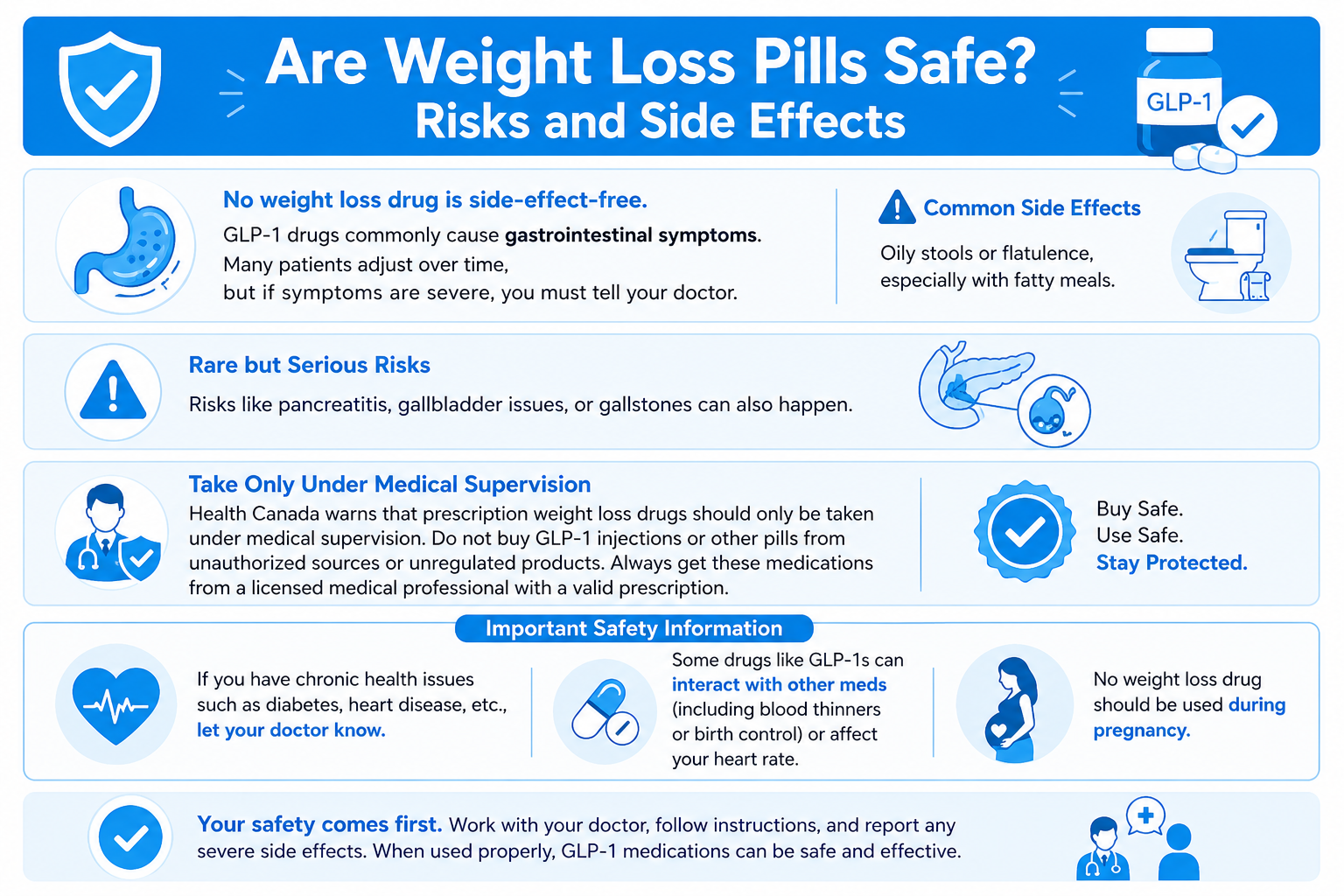
No weight loss drug is side-effect-free. GLP-1 drugs commonly cause gastrointestinal symptoms. Many patients adjust over time, but if symptoms are severe, you must tell your doctor. Rare but serious risks like pancreatitis, gallbladder issues, or gallstones can also happen. Orlistat’s typical side effects are oily stools or flatulence, especially with fatty meals.
Health Canada warns that prescription weight loss drugs should only be taken under medical supervision. Do not buy GLP-1 injections or other pills from unauthorized sources or unregulated products. Always get these medications from a licensed medical professional with a valid prescription.
If you have chronic health issues such as diabetes, heart disease, ect, let your doctor know. Some drugs like GLP-1s can interact with other meds (including blood thinners or birth control) or affect your heart rate. No weight loss drug should be used during pregnancy.
Final Thoughts on Weight Loss Pills
Talk to your healthcare provider about weight loss pills if you are interested. They can check if you meet the criteria and discuss options. Ontario’s drug plans cover some of these medications under certain conditions, so be prepared to pay for out-of-pocket costs or private insurance.
No pill alone will melt away the fat. Weight loss medications approved in Canada can help control hunger or absorb less fat, but they must be part of an overall plan. Beware of “appetite suppressant” products sold online; only trust FDA/Health Canada-approved drugs and a doctor’s advice. The best path is a balanced diet, activity, and medical guidance.
➲ More to know about Ozempic cost in Ontario
Commonly asked questions about Weight Loss Pills
Are weight loss pills safe?
Only prescription weight loss drugs approved by Health Canada are considered safe with a doctor’s supervision. Supplements and unauthorized pills may be unsafe.
How do appetite suppressant pills work?
Prescription appetite suppressants (like GLP-1 drugs) mimic hormones that slow digestion and curb hunger, helping you eat less.
What is the strongest weight loss prescription?
New evidence suggests trizepatide (Zepound/Mounjaro) produces the largest weight loss on average, outperforming semaglutide in trials.
Are over-the-counter diet supplements effective?
Most OTC “fat burning” or appetite-suppressant supplements lack solid evidence and can be a waste of money or risky.
What are the common side effects of weight loss drugs?
Many prescription weight loss medications cause gastrointestinal issues (nausea, diarrhea, constipation), or some rare but serious effects (pancreatitis, gallstones) may occur.
Resources

https://my.clevelandclinic.org/health/articles/7040-gastrointestinal-diseases
https://www.mayoclinic.org/diseases-conditions/gallstones/symptoms-causes/syc-20354214
https://www.hopkinsmedicine.org/health/conditions-and-diseases/gallbladder-disease
https://jamanetwork.com/journals/jamainternalmedicine/fullarticle/2821080
https://obesitycanada.ca/understanding-obesity/management
https://www.mayoclinic.org/healthy-lifestyle/weight-loss/expert-answers/phentermine/faq-20057940
https://www.mayoclinic.org/drugs-supplements/naltrexone-oral-route/description/drg-20068408
https://medlineplus.gov/druginfo/meds/a695033.html
https://my.clevelandclinic.org/health/drugs/19489-orlistat-capsules
https://my.clevelandclinic.org/health/drugs/23789-tirzepatide-injection
https://medlineplus.gov/druginfo/meds/a611003.html
https://medlineplus.gov/druginfo/meds/a618008.html